A fresh political controversy is gathering momentum around President Donald Trump and his increasingly visible relationship with White House aide Natalie Harp, whose extraordinary closeness to the president has become a subject of growing public fascination and political scrutiny.
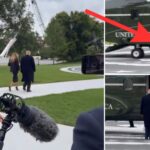
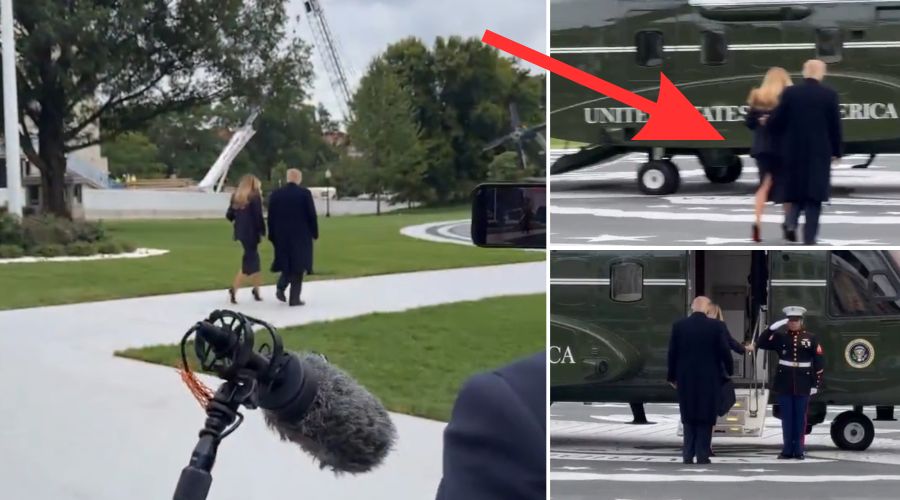
The latest discussion has been fuelled by footage and photographs showing Harp repeatedly accompanying Trump during official engagements, including appearances around Marine One, the presidential helicopter. Their frequent proximity has prompted questions about the aide’s unusual access to the president and the influence she may wield within his inner circle.
But what has particularly intensified the conversation is the growing speculation surrounding what happens when the cameras are no longer focused directly on the president.
Harp is not an ordinary White House employee. She has become one of Trump’s most recognisable aides, regularly travelling alongside him, assisting with his communications and maintaining an unusually prominent position within his presidential circle.
Earlier reporting has also revealed deeply affectionate personal notes attributed to Harp, including one in which she reportedly described Trump as her guardian and protector. Another message contained the striking declaration, “You are all that matters to me.”
Those revelations have prompted renewed questions about the boundaries between personal devotion and professional responsibility in the highest office in America.
The Marine One footage has added another dimension to the debate. Whenever Trump and Harp appear together, social media users closely examine their interactions, body language and apparent familiarity.
Some observers believe the president’s reliance on his aide deserves greater scrutiny, particularly given the sensitive nature of her position and her access to presidential information.
However, claims circulating online about an accidentally activated microphone capturing an intimate conversation between the pair have not been independently verified. No authenticated recording has established the alleged exchange, and neither Trump nor Harp has confirmed such an incident.
Nevertheless, the controversy has opened a much bigger political discussion: how much personal influence should one presidential aide have over the American president?
For Trump’s critics, the issue goes beyond photographs or speculation about personal affection. They argue that the American presidency demands transparency, sound judgment and clear professional boundaries, especially when national security and government decision-making are involved.
Supporters, meanwhile, could argue that a president is entitled to trusted advisers and that professional loyalty should not automatically become a political scandal.
The controversy also raises questions about the responsibilities of the White House communications team and whether the administration should address the growing public curiosity surrounding Harp’s extraordinary position.
Could this become another uncomfortable political distraction for Trump at a time when his every move is attracting intense attention?
And more importantly, if credible evidence ever emerged of presidential misconduct, would it create pressure for an official investigation or even calls for his resignation?
For now, there is no verified evidence of a romantic relationship between Trump and Harp, no authenticated recording of the alleged intimate conversation and no indication that Trump is preparing to resign over the matter.
But one thing is becoming increasingly difficult to ignore: Natalie Harp’s unusually prominent place in Trump’s inner circle has developed into a political story of its own, and the questions surrounding her access to the president are unlikely to disappear anytime soon.