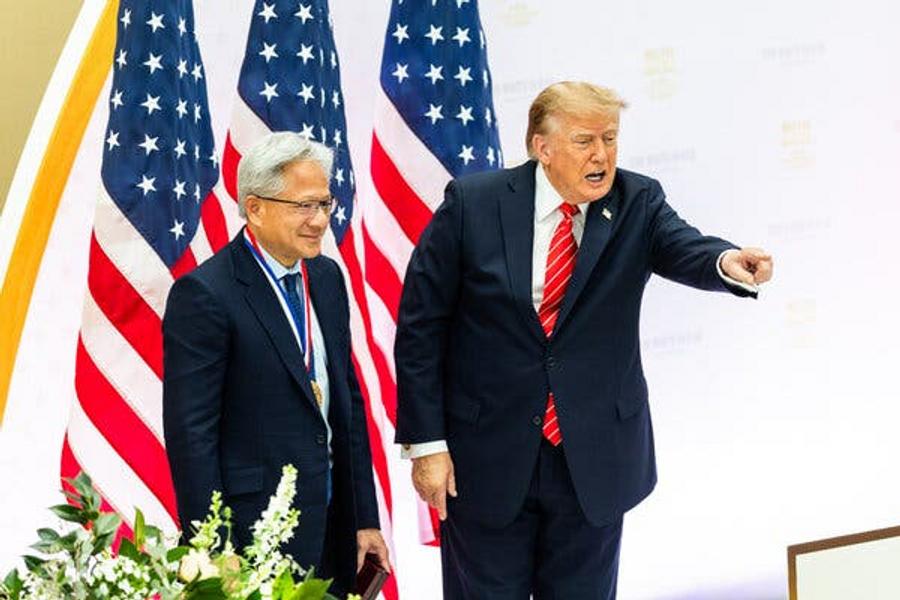
A major political and corporate controversy is unfolding in Washington after President Donald Trump publicly revealed that he personally intervened in Nvidia’s decision to bring back its former CEO, Jensen Huang.
In an extraordinary development on Monday, November 23, Trump told CNBC that he had spoken directly with Nvidia’s board and helped convince its members to reinstate Huang, who had stepped down just 11 days earlier.
“I made the deal,” Trump reportedly declared, taking credit for the dramatic reversal.
But the situation is considerably more complicated than a corporate leadership change.
Huang’s departure followed reports of multiple extramarital affairs, including an alleged relationship with Alice Huang, a businesswoman whom US intelligence officials reportedly suspect of having connections to Chinese intelligence. The allegations have raised serious national security questions, although Jensen Huang has not been charged with any crime.
Nvidia’s board initially accepted his resignation and indicated it did not intend to bring him back. However, following discussions involving Trump, Vice President JD Vance and senior government officials, the board unanimously reversed its position.
The company subsequently said it had received input from senior levels of the US government and was confident Huang’s reinstatement did not pose a national security risk.
That explanation has not satisfied everyone.
Several Republican lawmakers have questioned the decision, with Senator Pete Ricketts expressing concerns about Huang’s conduct and the unresolved national security issues. Senator Kevin Cramer also warned about the potential consequences of returning an executive facing such serious scrutiny.
Democrats have been equally vocal.
Senate Democratic Leader Chuck Schumer has called for investigations into the Trump administration, Nvidia executives and anyone potentially involved in wrongdoing.
Another issue attracting attention is Nvidia’s reported $25 million contribution to Trump’s proposed White House ballroom project. Some Democrats have questioned whether the company’s financial relationship with the administration deserves additional scrutiny.
Meanwhile, Nvidia shares reportedly surged more than 31% following the announcement of Huang’s return, adding another financial dimension to the controversy.
Trump has defended his intervention, arguing that Huang’s expertise is essential to America’s technological competition with China and that the country must protect its leading technology innovators.
However, with congressional questioning approaching and investigations continuing, the controversy is far from settled.
One question now dominates Washington: Was Trump’s intervention necessary to protect America’s technological future, or has the boundary between presidential influence, private business and national security become dangerously complicated?